

- Year 1 solar, per month
- $0
- Year 1 savings, per month
- $0
- Est. 25-year savings
- $0
Utility SOLRITE solar
Year 25: $538/mo vs $192/moYear 1Year 25
The product
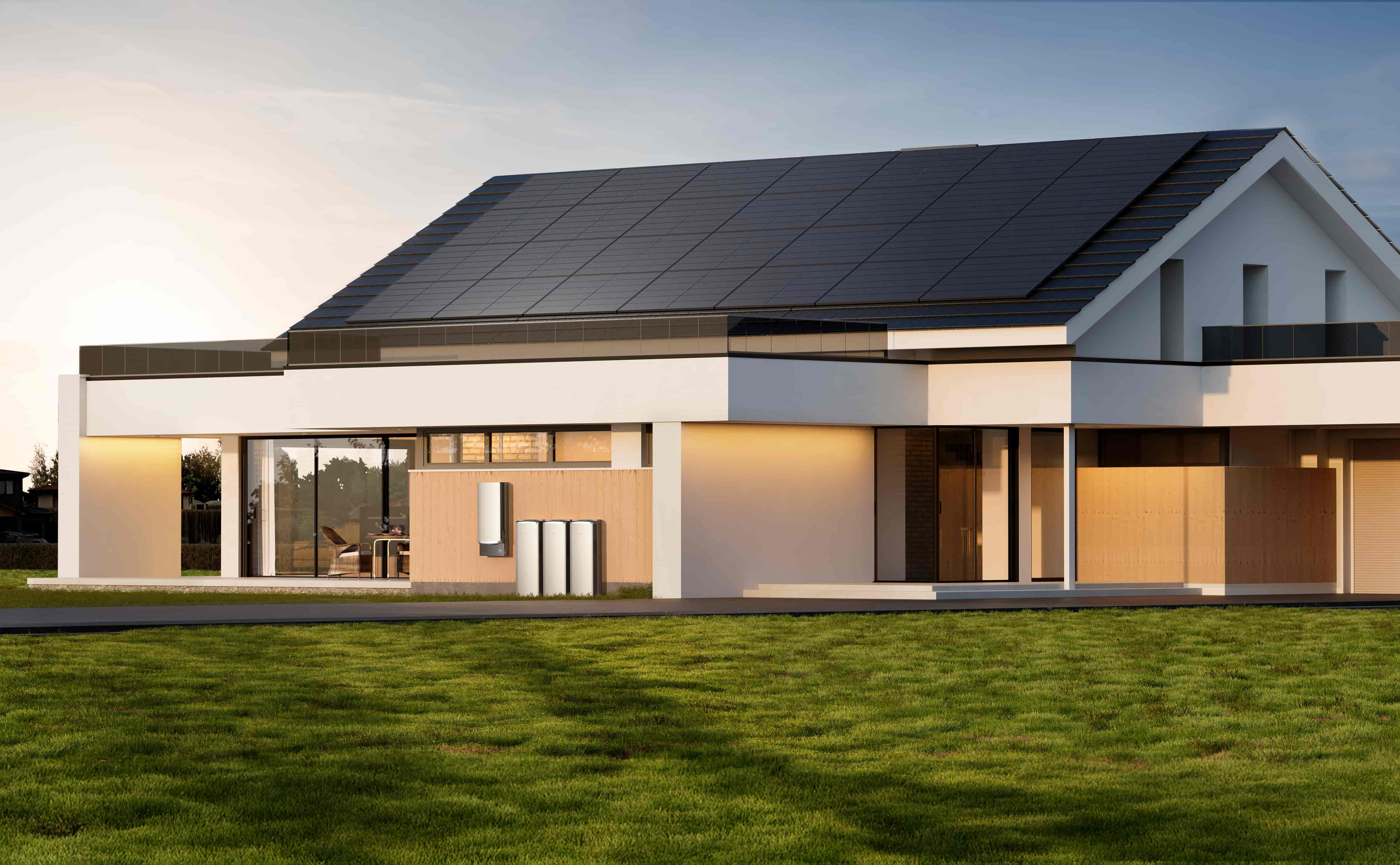
Two pieces of equipment, installed together and maintained for you. The panels make the power, the battery holds it, and together they run your home through peaks and outages.
12¢per kWh
Rooftop solarMakes your power through the day at a locked-in rate, with $0 upfront for equipment and install.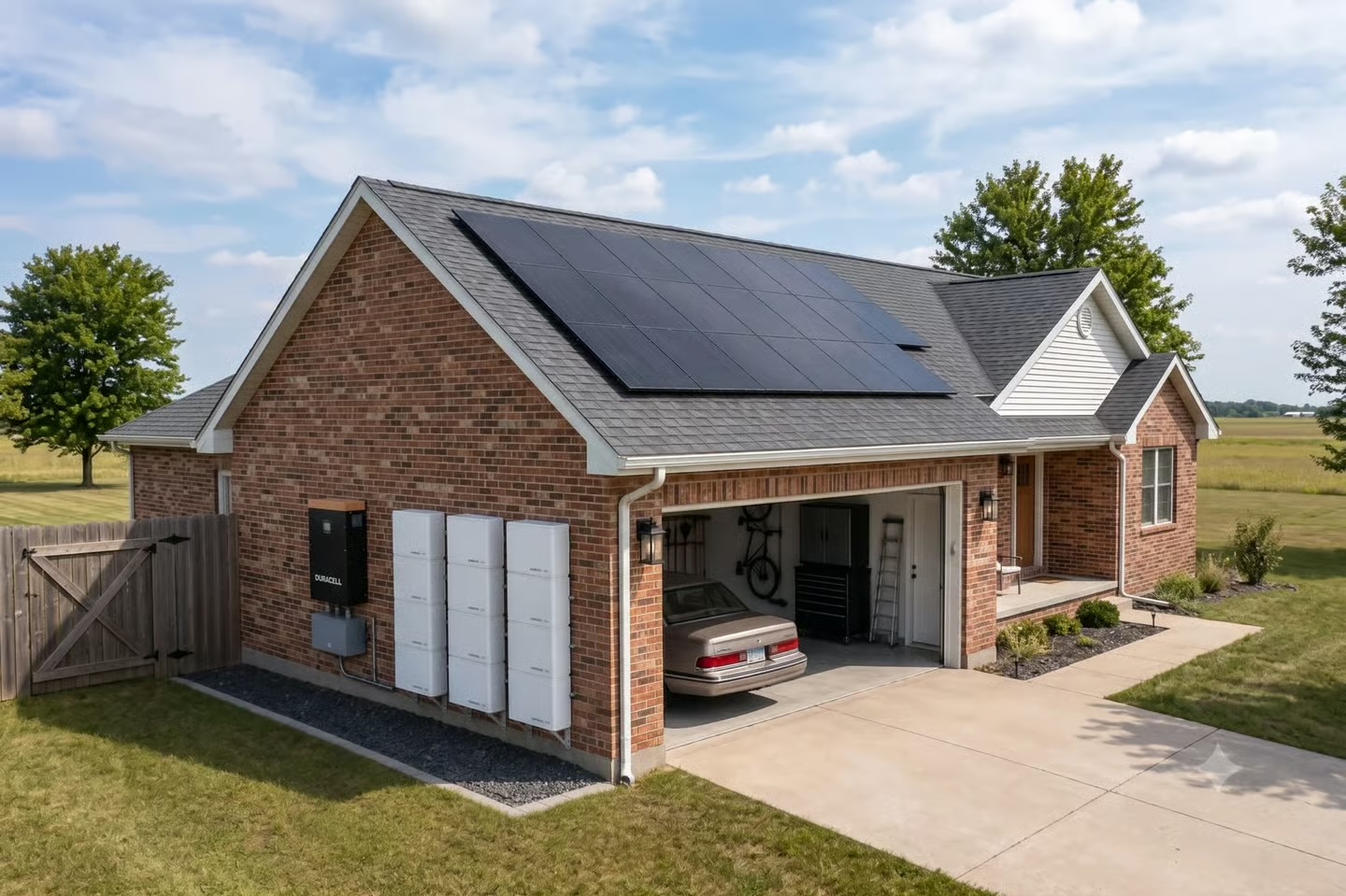
60 kWhDuracell battery
A power plant in your homeStores what your panels make, keeps your lights on in an outage, and earns from the grid at peak.How a virtual power plant works
Scroll through a day. The live diagram shows where your power comes from and where it goes.
Panels on your roof make power through the day. Your home uses solar first, and the extra energy charges a 60 kWh Duracell battery in the garage.
When the sun goes down, the battery takes over. You use the energy you stored at the same 12¢/kWh, and you are less exposed to utility rate swings.
On a hot afternoon, software coordinates thousands of home batteries to send power out together, like a power plant made of houses. That grid-services revenue helps pay for your equipment.
When the grid fails, your home disconnects from it and runs on the battery. The fridge stays cold, the sump pump keeps running and the lights stay on.
SOLRITE’s software coordinates hundreds to thousands of batteries so that together they act like one power plant. You keep the backup power and the grid gets help when it needs it.
The Illinois offer
No teaser rates and no fine print. SOLRITE owns and services the system. You buy the solar energy it produces at a set price.
Apply these terms to my billA real proposal, walked through
Plays on its own. Tap a chapter to jump ahead.

132%
of the home’s yearly usage, made on its own roof
Your proposal
Why this matters now
Illinois is adding demand faster than it is adding power plants. Home batteries are one of the fastest ways to close the gap, which is why the incentives are so large.
Why this is happening now
“We can improve the grid. The problem is time and money. Demand is growing faster than we can upgrade the infrastructure to support it.”
A single large data center campus can draw about
0 GW
That is roughly the power used by a metro area of 0 people, and it can come online much faster than the grid can grow to support it.
This mismatch is the problem. Even with billions going into the grid, new demand is growing faster than transmission lines, substations, transformers and power plants can be added.
The Data Center Investment Program offers major state and local tax exemptions to projects that commit at least $250 million.
$500 million over five years goes to infrastructure and R&D at the Illinois Quantum and Microelectronics Park on Chicago’s South Side.
Starting July 1, Governor Pritzker stops new incentive applications, citing concerns about affordability, grid reliability, water and local communities. New data centers are still allowed. The state has only stopped offering this incentive to new projects.
Adding power plants takes years. Plenty of power can be stored on roofs and in garages today. A virtual power plant turns thousands of homes into a fast, flexible resource the grid can call on right away.
Data centers in Illinois
Illinois already runs about 1.9 GW of data centers. Developers have now asked for nearly 29 GW more, north and downstate. Every one of them plugs into the same grid your home depends on, and that grid is already short.
The power being requested is about 15 times what Illinois data centers use today, and it all draws on the same interconnected grid.
The Illinois power grid
Illinois is wired into one interconnected grid that shares power across utility and state lines. Its spare capacity has dropped below the safety target for the first time. If the grid keeps adding supply at today's pace, we estimate it reaches the failure zone around 2030, and every Illinois home shares that risk.
Reserve margin is how much spare power the grid has above its hottest-day demand. Actual values: 2027/2028 regional capacity auction report, total reserve margin. The two forecast lines are our estimate: demand rises about 6 GW a year (the grid operator's forecast of +32 GW by 2030), while new supply keeps the recent pace of about 2 GW a year. The flexible-capacity line adds another 3 GW a year of batteries, demand response and VPPs. The 7% failure point is an estimate of where normal plant outages on a hot peak day can use up all spare power.
When the grid gets tight, every home pays more and faces the same risk of rolling outages on the hottest and coldest days. Power plants and transmission lines take years to build. Home batteries tied into a virtual power plant can be added in weeks, which is why Illinois utilities now pay homeowners to join one.
What California learned the hard way
In 2020, California had plenty of solar power during the day and not enough at 7 PM. Illinois runs on a different grid with its own warning signs. Batteries charged by rooftop solar address both problems.
One hot summer day on the grid
California · what happened
During a West-wide heat wave, the California grid operator orders its first rotating outages since 2001. Regulators later found that planning had not kept up with the early evening hours, after solar fades but while air conditioners are still running.
The state adds more than 3,100 MW of battery storage in two years and pays homes and businesses to cut use or discharge batteries when the grid asks.
Demand sets an all-time record. Batteries and demand response help close the evening gap, and rotating outages are avoided.
Illinois · what’s building
In MISO, the grid that serves Ameren Illinois, the 2022–23 capacity auction shows a 1,230 MW shortfall in its North and Central zones. Prices hit the $236.66/MW-day ceiling.
MISO warns it could have to cut power to as much as 5 GW of demand. It avoids ordering outages, but with little room to spare.
NERC rates MISO at elevated risk of shortfalls as coal and gas plants retire. The 2026–27 summer capacity price in Ameren’s zone clears at $424.30/MW-day.
A new power plant takes years to permit and build. Batteries already sitting in thousands of garages can respond the same afternoon. That is why the incentives in Illinois now focus on storage you let the grid use when it needs it.
Storage rebate for batteries paired with solar and a smart inverter.
Paid for what the battery delivers on weekdays from 4 to 6 PM, June through September. This program comes from Illinois’ new grid law, Public Act 104-0458.
The state buys the renewable credits your solar produces. This is the 2026–27 base price for small systems in Ameren territory.
Available for leased and PPA systems. The homeowner tax credit (25D) ended Dec 31, 2025.
Program amounts can change. We confirm current rebate, REC and tariff terms in your written proposal.
SOLRITE owns the equipment and earns money when the aggregated batteries provide services to the grid. That revenue, plus the energy you buy at 12¢/kWh, pays for the system, so you do not buy the panels or the battery.
It is software that coordinates hundreds or thousands of home batteries so they can act together like one power plant. When the grid is under strain, the fleet can help support it.
Yes. Battery backup is part of the offer. When the grid goes down, your home can run on the 60 kWh Duracell battery.
SOLRITE does. Monitoring, maintenance and repairs are included because SOLRITE owns the system.
Solar starts at 12¢/kWh. Independent coverage of the launch reports a 25-year agreement with a 2.9% annual escalator. Your advisor will go through the exact terms in your agreement.
The program is for qualifying homeowners in Ameren Illinois territory. Your roof, your usage and other factors decide eligibility. A Living Brite advisor can confirm quickly.
A Living Brite advisor looks at your roof and your usage and sends you a proposal made for your home. There is no obligation and no cost.